
Companies rarely decide to rebrand without a reason. Rebranding is not about updating a logo or refreshing a visual identity. It usually happens when the way a company presents itself no longer reflects what the business has become.
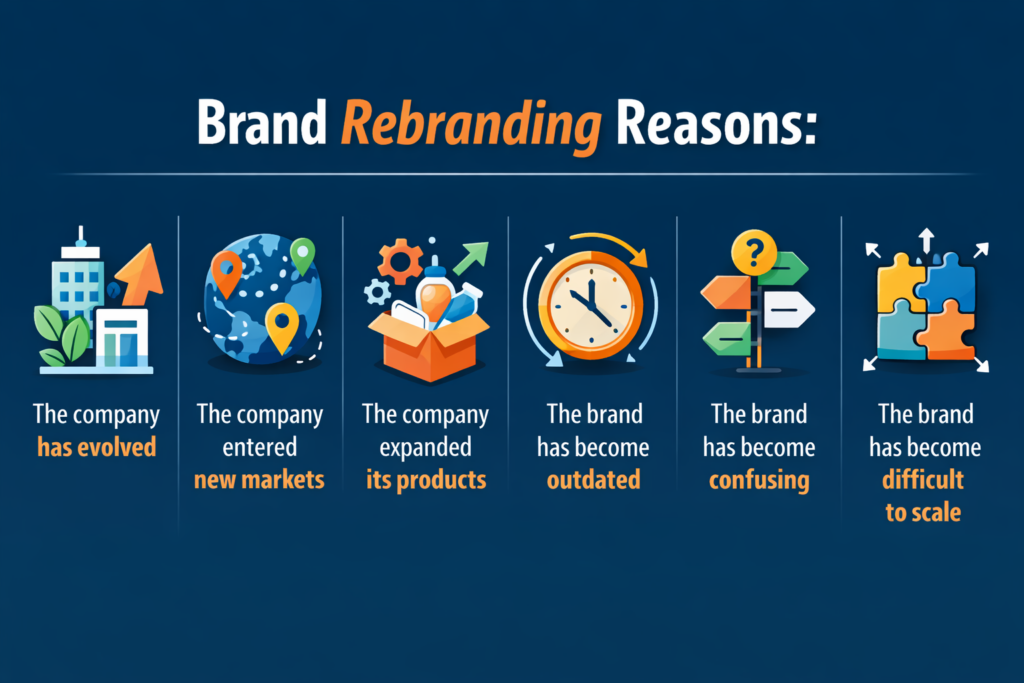
Sometimes the change is strategic. The company has evolved, entered new markets, or expanded its products. In other cases, the reason is more practical. The brand has become outdated, confusing, or difficult to scale.
At its core, rebranding is about alignment. Companies consider it when their identity, positioning, or perception no longer aligns with their ambitions or reality.
What Rebranding Actually Means
Rebranding is often misunderstood as a visual redesign. While visual identity is part of the process, rebranding usually goes deeper.
It involves revisiting the foundations of how a company communicates its value.
This may include redefining brand strategy, clarifying positioning, developing a new visual system, adjusting messaging, or sometimes even changing the company name.
The goal is not simply to look different. The goal is to ensure the brand accurately reflects what the company does and how it wants to be perceived.
Common Moments When Companies Rebrand
Although every situation is unique, companies tend to consider rebranding at certain turning points in their growth.
When the Company Has Outgrown Its Original Identity
Many companies begin with a brand that reflects their early stage. The name, messaging, and visual identity may work well when the company is small or focused on a narrow audience.
As the business grows, however, that identity may start to feel limiting.
A startup that originally built tools for freelancers may expand into enterprise software. A company that began in one region may become global. When this happens, the original brand may no longer communicate the scope of the business.
Rebranding helps align the brand with the company’s new scale and direction.
When the Brand No Longer Reflects the Product
Another common trigger for rebranding is product evolution.
Companies often start with a single product and build their brand around it. Over time, the product ecosystem expands. The brand may begin to feel too narrow or overly descriptive of one feature.
The collaboration platform Slack provides an interesting example of brand evolution. While the product started as a messaging tool for teams, it gradually positioned itself as a broader collaboration platform connecting tools, workflows, and knowledge.
As the product matured, the brand communication evolved to reflect that larger role in workplace productivity.
Rebranding in such cases helps reposition the company around the broader value it provides.
When Market Positioning Is Unclear
Sometimes companies realize their brand does not clearly communicate what makes them different.
In competitive markets, vague positioning can be a serious problem. If customers cannot quickly understand why a company is distinct, the brand becomes interchangeable with competitors.
Rebranding allows companies to sharpen their narrative. It can clarify who the product is for, what problem it solves, and why it matters.
This type of rebranding is often more strategic than visual.
When Entering New Markets
Expanding into new geographic regions or industries can expose limitations in an existing brand.
A name that works well in one market may be difficult to pronounce or interpret in another. Visual identity that resonates locally may not translate culturally.
In these cases, companies may adjust their brand to make it more adaptable internationally.
Global technology companies frequently refine their branding as they scale to new audiences.
When the Brand Feels Outdated
Design trends change, but the deeper issue is not aesthetics alone. A brand may start to feel disconnected from the expectations of modern audiences.
This often happens when visual systems, messaging style, or communication channels no longer match how people interact with products today.
Updating the brand can make the company feel more relevant without changing its core identity.
Many established companies periodically refresh their brands for this reason. The goal is not reinvention, but renewal.
When Reputation Needs Resetting
Occasionally, rebranding is driven by reputation challenges.
If a company’s brand becomes strongly associated with negative perceptions, leadership may consider a more significant identity shift to signal a new direction.
This type of rebranding is complex because it requires more than design changes. The company must also demonstrate real operational change. Without that, audiences quickly recognize the rebrand as cosmetic.
The Difference Between Refreshing and Rebranding
Not every brand update is a full rebrand.
Sometimes companies simply refresh their visual identity or modernize their communication style while keeping the underlying strategy intact.
A full rebrand, by contrast, typically involves bigger changes. These may include positioning, messaging frameworks, naming, and visual systems.
The distinction matters because the scale of the change should match the problem the company is trying to solve.
Why Rebranding Can Be Valuable
When done thoughtfully, rebranding can unlock several advantages.
- It can clarify how a company communicates its value.
- It can help the business enter new markets.
- It can make the brand more distinctive in competitive environments.
- It can strengthen recognition and trust among customers.
Most importantly, a well-executed rebrand creates alignment between the company’s strategy, product, and identity.
When those elements support the same story, the brand becomes easier for people to understand.
Signs It May Be Time to Rebrand
Companies sometimes hesitate to consider rebranding because it feels disruptive. However, certain signals often indicate that the brand is no longer working effectively.
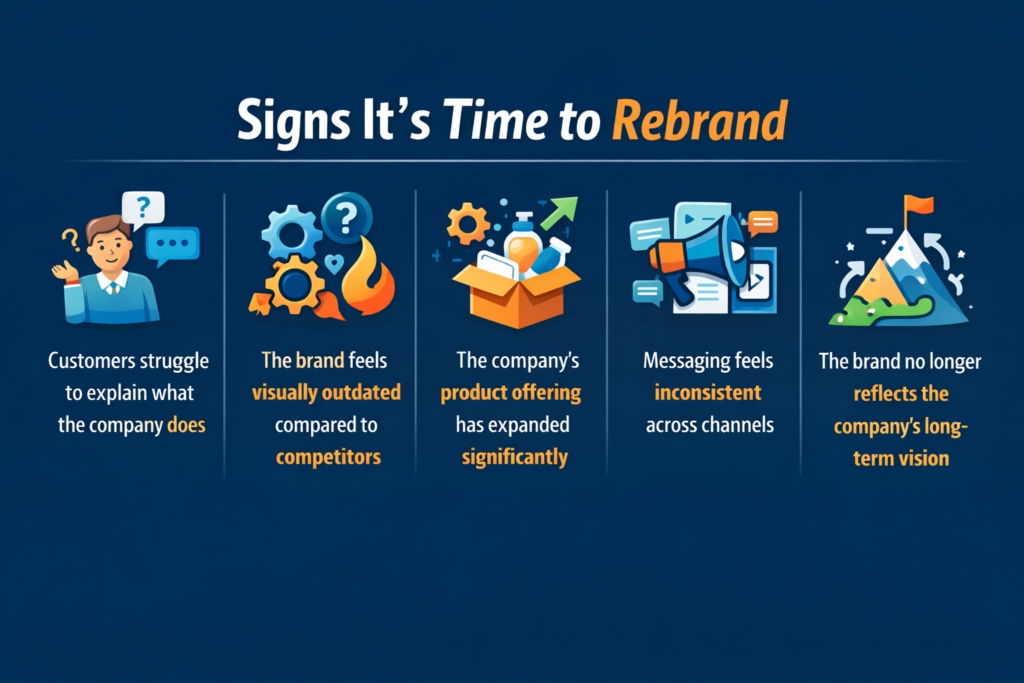
- Customers struggle to explain what the company does.
- The brand feels visually outdated compared to competitors.
- The company’s product offering has expanded significantly.
- Messaging feels inconsistent across channels.
- The brand no longer reflects the company’s long-term vision.
When these signals appear together, it often suggests that the brand needs reevaluation. A professional brand design agency can become your partner in your company’s rebranding, or you can turn to your internal brand design team.
Frequently Asked Questions
What is a rebrand?
A rebrand is the process of changing how a company presents itself to the market. This may involve updating brand strategy, visual identity, messaging, positioning, or even the company name.
Why do companies rebrand?
Companies rebrand to reflect growth, clarify positioning, enter new markets, modernize their identity, or address changes in reputation.
How often should companies rebrand?
There is no fixed timeline. Some brands remain effective for decades, while others require updates as companies evolve. The key factor is whether the brand still reflects the company’s strategy and market position.
Is rebranding risky?
Rebranding can involve risk, especially if customers strongly associate with the existing brand. However, when done thoughtfully and communicated clearly, it can strengthen recognition and support long-term growth.
Final Thoughts
Rebranding should not be treated as a purely creative exercise. At its best, it is a strategic process that aligns how a company looks, speaks, and behaves with where the business is heading.
The strongest rebrands emerge from clear strategic thinking rather than aesthetic preferences.
Companies that approach rebranding thoughtfully tend to create identities that last longer and communicate more effectively.